Sewage coming up through a tub, toilet or floor drain is one of the more unpleasant problems a property owner can face. In Brooksville, there is also a practical question about which utility covers the area. This post explains how to sort that out, how to tell where the problem sits, and what safe cleanup involves.
Key takeaways
- Inside the city limits, water and sewer service is run by the City of Brooksville Utilities Department, and outside them Hernando County Utilities Department serves customers.
- Sewage is contaminated water, so it is cleaned with containment, removal and antimicrobial treatment, not just mopped.
- A backup in only one fixture often points to the home's own drain, while several fixtures backing up together may point to something larger.
- Porous materials touched by sewage, such as carpet, pad and wet drywall, are usually removed.
- Photos and a short log of what happened help with both a utility conversation and an insurance claim.
Two utilities cover the Brooksville area
Water and sewer service inside Brooksville is run by the City of Brooksville Utilities Department. Outside the city limits, Hernando County Utilities Department serves customers.
That matters because a backup can start in the home's own drain or in a larger system beyond it. Knowing which utility serves the address gives a property owner the right place to ask questions about the area system.
Signs of a sewage backup
A backup does not always arrive as a flood. Early signs can be small and easy to dismiss, but they point to a drain that cannot carry waste away.
When more than one of these signs shows up together, it is wise to stop using water in the house. Every flush, shower and load of laundry sends more water into a drain that is already full, and the extra volume ends up on the floor instead.
- Water or waste rising in a tub, shower or floor drain when a toilet is flushed.
- A toilet that gurgles or bubbles when a washer or sink drains.
- Slow drains throughout the house, not just in one bathroom.
- A sewer smell near a floor drain, bathroom or laundry area.
- Wet flooring or stains near a drain after heavy use.
Home drain or main: how to tell
Finding where a backup starts is a job for a plumber, but a few observations help narrow it down before the plumber visits.
Only one fixture is affected
If a single toilet or sink is blocked and the rest of the house drains normally, the problem is often in that fixture's own drain or trap. Clearing it may solve the problem.
Several fixtures back up together
If more than one fixture is affected at the same time, especially the lowest ones such as a floor drain or a first floor shower, the clog may be further along in the drain system. That is the time to bring in a plumber and to call the utility that serves the address to ask whether the area system has a problem.
Ask neighbors and note the pattern
Neighbors with the same problem point toward a larger issue, and a short call to the serving utility can confirm whether others have reported it. A backup that appears only after heavy use or during rain is also a useful clue to share with a plumber.
Why sewage is treated as contaminated water
Sewage carries bacteria and other contaminants, so it is classified as Category 3 water. That affects who should be in the area and what happens to materials that touched it.
The sewage backup cleanup page for Brooksville explains the full process. The important point for a homeowner is to keep people and pets out of the affected area and to avoid cleaning it with ordinary household tools.
- Keep children, pets and anyone with health concerns out of the area.
- Do not use a household vacuum or fans on sewage affected floors.
- Wear protective gear if contact cannot be avoided, and wash thoroughly afterward.
- Do not wait to call, since contaminated water spreads and soaks in.
What cleanup involves
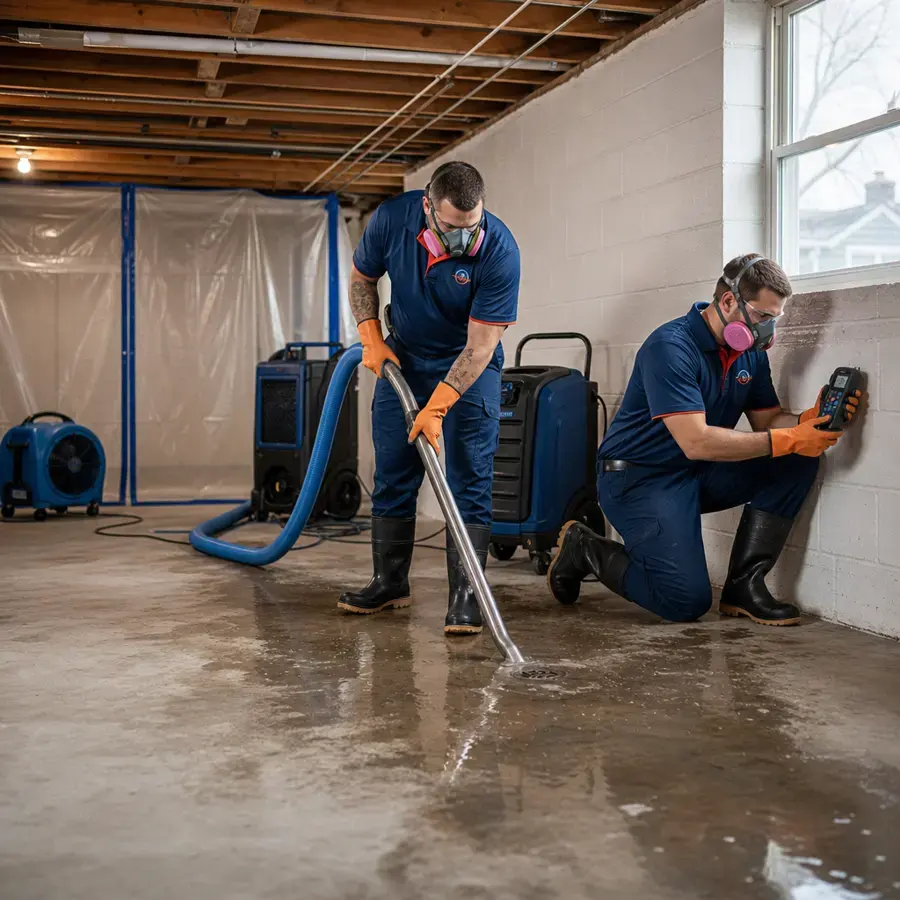
Cleanup starts with containment so contamination does not spread to clean rooms. Then the standing water is extracted, and the materials that cannot be cleaned are removed.
Surfaces that remain are cleaned and treated with antimicrobial products, and air scrubbers filter the air during the work. Because sewage reaches every pore of a porous material, the crew removes more than looks wet, and the edge of the cut is checked with moisture readings before anything goes back.
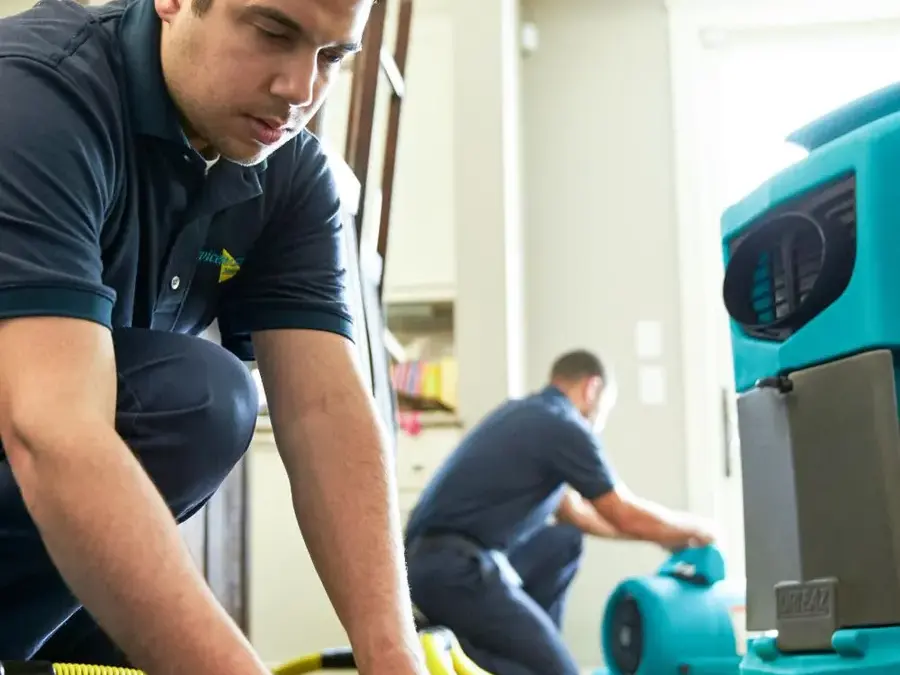
After that, drying equipment brings the structure back to its dry goal. The water extraction page for Brooksville covers the extraction step.
- Containment seals off the affected area.
- Standing sewage is extracted.
- Carpet, pad and wet drywall are removed.
- Surfaces are cleaned and treated, and air scrubbers run.
- Drying continues until readings reach the dry goal.
Older buildings and aging underground piping
The City of Brooksville Utilities Department describes Brooksville as a very old city with aging underground piping to maintain. Historic Downtown Brooksville has historic homes along brick streets, and older buildings often have older drains.
The city treats wastewater at the William S. Smith Water Reclamation Facility, and bid documents describe expanding it from 1.9 MGD to 3.0 MGD. None of that changes what a homeowner should do during a backup, but it shows why sewer problems are a recurring concern for an older city.
Documentation and insurance
Take photos of the affected area before cleanup begins, and write down when the problem started and what was done. If a utility is contacted, note the date and who was spoken to.
Coverage for a sewer or drain backup depends on the policy, and some policies treat it as a separate item. Check the wording or ask the insurer, since the answer shapes what repairs are paid for and how the claim should be described.
The Brooksville service area page lists other water losses handled in the city, and the sewage backup page shows the same process in more detail.
- Date and time the backup was first noticed.
- Which fixtures were affected and where the water came up.
- Photos of floors, walls, furniture and personal items.
- Notes on who was contacted, including the utility, a plumber and the insurer.
- Receipts for any plumbing or cleanup work.
Questions
Who runs sewer service in Brooksville?
Inside the city limits it is the City of Brooksville Utilities Department. Outside the city limits, Hernando County Utilities Department serves customers.
Is sewage backup an emergency?
It is time sensitive. Sewage is contaminated, so people and pets should stay out of the area, and cleanup should start before the water soaks into porous materials.
Can carpet that got sewage on it be saved?
Usually not. Carpet, pad and drywall that touched sewage are typically removed, since cleaning cannot reliably remove the contamination from porous material.
How can a backup in one toilet differ from a main problem?
If only one fixture is blocked, the problem is often in that fixture's own drain. If several fixtures back up together, the cause may be further along in the drain system.
Does insurance cover a sewer backup?
It depends on the policy. Some policies treat backup coverage as a separate item, so check the wording or ask the insurer.