Structural Drying and Dehumidification in Zephyrhills, FL
Surfaces can feel dry while the slab, block and framing still hold water. The drying team sets equipment to the class of loss and keeps it running until every material reads dry.
(888) 621-2041Get structural drying set up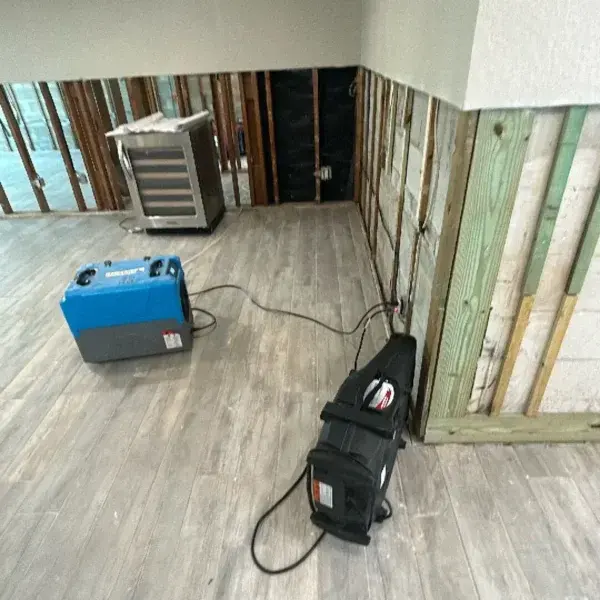
Structural Drying and Dehumidification at a glance
First steps for structural drying and dehumidification in Zephyrhills
- 1
Get the liquid water out
Extraction comes before drying.
- 2
Keep doors and windows shut
Outdoor humidity slows drying.
- 3
Run the AC if it is safe
It helps pull moisture from the air.
- 4
Leave equipment in place
Moving it changes the readings.
How structural drying and dehumidification works in Zephyrhills
Structural drying is the part of a water loss that decides whether the problem comes back. In Zephyrhills, the house is often concrete block on a slab, finished with drywall, tile, vinyl plank and carpet. Concrete and block soak water deep and give it up slowly, and the outdoor air is humid most of the year, so drying has to be controlled, measured and finished by the numbers.
What does structural drying and dehumidification cost in Zephyrhills, FL?
In Zephyrhills, FL, structural drying typically runs $1,000 to $8,000, depending on how many rooms need equipment, the class of loss and how many days the slab, block and framing take to reach the dry goal.
One or two rooms, Class 1 to 2
$1,000 to $2,500- Air movers
- LGR dehumidifier
- Daily readings
Several rooms, Class 3
$2,500 to $5,000- More equipment
- Cavity drying
- Psychrometric logs
Slab, block or hardwood, Class 4
$5,000 to $8,000- Desiccant drying
- Drying mats
- Extended monitoring
Ranges are typical, not a quote: category of water, square footage, material class and how fast drying started move the number most. Run the Zephyrhills water damage cost calculator for a closer range.
The structural drying and dehumidification process, stop by stop
The tech who does the walkthrough maps moisture before any equipment goes down, so the drying plan matches what is actually wet. Equipment stays until the readings say dry, not until the room looks dry.
- 1
Map and reference
Wet areas mapped, dry reference taken.
- 2
Set equipment
Air movers and dehumidifiers sized.
- 3
Read daily
Psychrometric logs and material readings.
- 4
Pull on readings
Equipment leaves at the dry goal.
How the drying team sets up
- Moisture mapping with pinless and pin meters and thermal imaging.
- Air movers placed to the room's evaporation load, aimed along wet walls.
- LGR dehumidifiers sized to the class of loss; desiccant units for dense Class 4 materials.
- The house kept closed so outdoor humidity stays out.
How dry is measured
The drying team takes a dry reference reading from unaffected material in the same house, then reads every wet area against it each day. Temperature, relative humidity and grains per pound go into psychrometric logs, so the claim file shows the room getting drier. Equipment stays until materials read within 2 to 4 points of the dry reference, not until the room looks dry.
Slabs, block and Class 4 drying
Concrete slabs under tile, block walls and hardwood are Class 4 materials that hold water tightly. They may need desiccant dehumidification, drying mats or lifting the flooring. UF/IFAS Extension covers humidity and moisture in Florida homes, and the EPA indoor air quality pages explain why thorough drying matters. Estimate a timeline with the drying time estimator, and see water extraction for the step before drying.
Structural drying and dehumidification across Zephyrhills and east Pasco
The Zephyrhills restoration crew covers ZIP 33539, 33540, 33541 and 33542, from Downtown Zephyrhills and the Gall Boulevard corridor out to Crystal Springs, Lake Bernadette, Silver Oaks and Zephyrhills West.
Nearby coverage reaches Wesley Chapel, Dade City, Plant City, Thonotosassa, San Antonio, Temple Terrace, Lakeland, Brooksville.
Related water damage services in Zephyrhills
Structural Drying and Dehumidification questions in Zephyrhills, FL
Why can't the equipment go when it feels dry?
Surfaces dry first. Slabs, block, framing and the back of drywall hold water longer, and readings show when they are actually dry.
What is an LGR dehumidifier?
A low grain refrigerant dehumidifier pulls more moisture from the air than a household unit, even as the air gets drier.
Why keep the windows closed?
Outdoor air in Zephyrhills is usually humid. Closed drying lets the dehumidifiers control the air.
What does class of loss mean?
Class 1 to 4 describes how much water materials absorbed and how hard they are to dry. It sets how much equipment a room needs.
How long does structural drying take?
A contained Class 1 loss usually dries in three to five days. Class 4 slabs and block take longer.
Is the equipment noisy?
Air movers and dehumidifiers run day and night and make steady fan noise. It is part of drying on schedule.
Still dealing with structural drying and dehumidification?
Shut off the water at the source if it is safe, keep clear of wet outlets, then call.
Still damp days later? Get the structural drying started.
Damp slab and block hold water long after the floor feels dry. The drying team keeps going until the readings pass.
(888) 621-2041Zephyrhills drying crew, 24/7- 24/7 dispatch, hurricane season and summer storms included
- Structural drying held to the IICRC S500 standard
- Daily moisture readings logged for the claim file
- Find us on Google