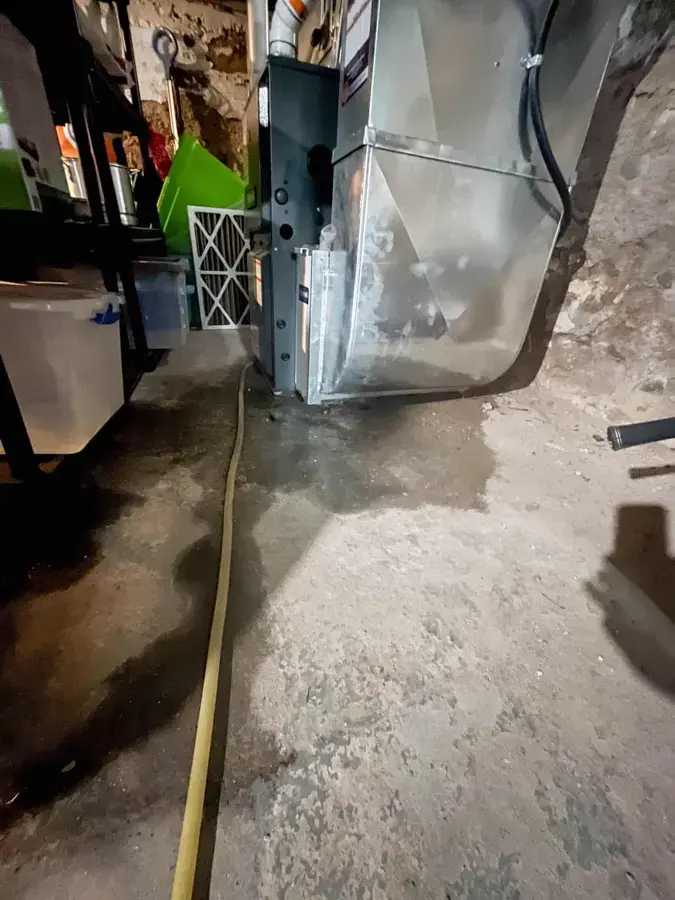
In Zephyrhills the air conditioner runs for much of the year, and every hour it runs it pulls water out of the air. That water is supposed to leave through a small drain. When the drain clogs, the pan overflows, and the first sign is often a ceiling stain in a hallway or a closet that was dry the day before.
Key takeaways
- An air conditioner removes moisture from humid air, and that condensate leaves through a drain that can clog.
- A stain on a ceiling or wall near an attic or closet air handler often points to the AC, not the roof.
- Timing helps tell the two apart. A roof leak shows up after rain, while an AC overflow shows up when the system has been running.
- Wet attic insulation and drywall need to be opened and dried before the ceiling fails.
- Turning the system off at the thermostat stops new water and keeps the problem from growing while help is arranged.
Where the water comes from
An air conditioner cools a house by pulling heat and moisture out of the air. The moisture collects on the cold coil, drips into a pan and leaves the house through a small condensate drain.
In a humid place like Zephyrhills, that is a lot of water over a season. Zephyrhills has a long cooling season, so the drain is working for most of the year.
Why condensate drains clog and pans overflow
The drain is small, and it carries water that sits in a dark, warm space. Over time, slime, dust and debris can build up inside it.
- Algae and slime growth inside the drain slow the flow.
- Dirt from a filter that is not changed regularly collects in the pan.
- A kinked or sagging drain holds water instead of letting it run out.
- A cracked or rusted pan under an older unit leaks into the space below.
- A safety switch may stop the system when the pan is full, but not every unit has one that works.
Signs the AC is the source
A condensate overflow leaves a pattern. Knowing it helps a homeowner act before the stain becomes a sagging ceiling.
- A brown or yellow stain on a ceiling near a hallway or closet air handler.
- Water in the pan or on the floor of a closet where the unit sits.
- Dripping or a damp smell near the unit when the system has been running.
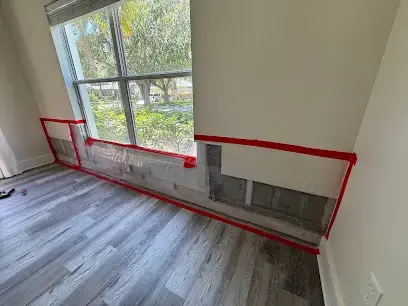
- Damp baseboard or drywall below the air handler.
- The air conditioner shutting off by itself, which can mean a safety switch caught a full pan.
AC overflow or roof leak
Afternoon thunderstorms are a feature of the Zephyrhills wet season, which runs from June to September. That makes it easy to blame the roof whenever a stain shows up, even when the air conditioner is at fault.
Look at the timing
A roof leak tends to appear during or after rain. An AC overflow tends to appear on hot days when the system has been working hard, even when it has not rained.
Look at the location
A stain near the air handler or below the drain points to the AC. A stain near a roof edge, vent or chimney points to the roof.
The roof leak water damage page covers that case.
Check the system
If the pan holds water or the drain looks clogged, the AC is the likely cause. A technician can confirm.
What a wet ceiling needs
Water from an air handler in the attic soaks the insulation first and then the drywall. By the time a stain is visible, the ceiling is often wet through.
The crew opens the affected section so the framing and insulation can be checked. Wet insulation is removed, and the drywall is cut back to dry material.
The ceiling leak water damage page describes how the opening and drying work.
Attic units add a wrinkle. Water can run along joists and insulation for some distance before it drips through the ceiling, so the stain may appear far from the actual overflow.
That is why readings are taken well beyond the visible stain, and why the opening is often larger than the mark suggests.
A closet unit behaves differently. Water usually collects on the floor, soaks the baseboard and carpet, and wicks up the drywall.
The restoration plan then focuses on flooring, wall bottoms and the closet itself.
- Moisture readings show how far the water has spread.
- Wet insulation is removed and not dried in place.
- Drywall is cut out where it is soaked or sagging.
- Joist bays and framing are dried with air movers and dehumidifiers.
What to do right away
A few simple steps keep the damage from growing.
- Turn the air conditioner off at the thermostat so no more water is made.
- Place towels and a container under any active drip, and move belongings away.
- If a ceiling bulges with water, keep people clear and ask a professional about releasing it safely.
- Photograph the stain, the pan and the area around it.
- Keep people clear of a sagging ceiling, since wet drywall can fall.
Costs, drying and prevention
The price cards on the AC leak page show a closet overflow caught early at $800 to $2,500, an attic unit over one ceiling at $2,500 to $5,000, and a long running leak across several rooms at $5,000 to $7,500. Those are typical ranges, not a quote, and drying time is covered on the structural drying page.
Prevention is simple. Change the filter on schedule, have the drain cleared as part of regular service, and look at the pan when the unit is checked.
A homeowner with an older attic unit may also ask about a backup safety switch. Insurance coverage varies, so it helps to read the policy and keep photos of the damage.
The AC leak water damage page has more detail.
Questions
Why does an AC cause a ceiling stain?
A clogged condensate drain lets the pan overflow, and the water soaks the attic insulation and the drywall below. The stain is the first visible sign.
How can I tell if the stain is from the AC or the roof?
Timing and location help. An AC overflow shows up after the system has been running and sits near the air handler. A roof leak shows up after rain and often sits near a roof edge or vent.
Should the air conditioner stay on?
Turn it off at the thermostat until the drain is cleared. Running it keeps producing water, which can make the damage worse.
Does the wet ceiling always need to be cut open?
Often, yes. Wet insulation and drywall are checked with moisture readings, and sections that are soaked or sagging are removed.
How can condensate overflows be prevented?
Change the filter on schedule, have the drain cleared during regular service and check the pan. Older units may benefit from a safety switch that stops the system when the pan fills.