Structural Drying in Plant City, FL
Plant City rain and humidity leave slabs, block and framing wet long after the water is gone, so monitored drying with dehumidifiers is what actually finishes a water loss.
(888) 621-2041Book a Plant City drying plan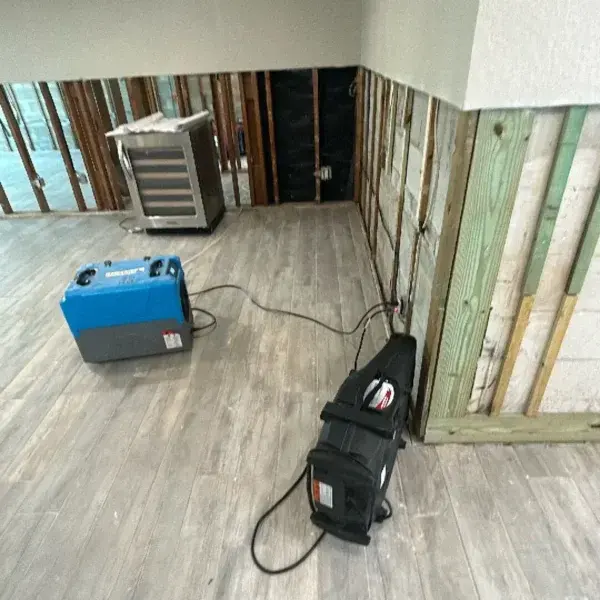
Structural Drying and Dehumidification at a glance
First steps for structural drying and dehumidification in Plant City
- 1
Stop the water
Fix or shut off the source.
- 2
Remove standing water
Extraction comes before drying.
- 3
Keep it closed
Close windows and doors during drying.
- 4
Call for readings
Meters decide what is still wet.
How structural drying and dehumidification works in Plant City
Water does not leave a building just because the pumps stop. It lives in the slab, the block, the framing and the cabinets, and humid Plant City air makes it harder to shed. Structural drying is the measured process of removing that water until the readings say it is gone.
What does structural drying and dehumidification cost in Plant City, FL?
Structural drying in Plant City commonly runs from $1,000 to $8,000. A small loss in a room or two costs the least, while dense slab, block or hardwood floors that call for desiccant units cost the most.
One or two rooms, Class 1 to 2
$1,000 to $2,500- Air movers
- LGR dehumidifier
- Daily readings
Several rooms, Class 3
$2,500 to $5,000- More equipment
- Cavity drying
- Psychrometric logs
Slab, block or hardwood, Class 4
$5,000 to $8,000- Desiccant drying
- Drying mats
- Extended monitoring
Ranges are typical, not a quote: category of water, square footage, material class and how fast drying started move the number most. Run the water damage cost calculator for a closer range.
The structural drying and dehumidification process, stop by stop
The tech who does the walkthrough maps moisture before any equipment goes down, so the drying plan matches what is actually wet. Equipment stays until the readings say dry, not until the room looks dry.
- 1
Set the equipment
Machines go where readings point.
- 2
Monitor daily
Temperature, humidity and moisture are recorded.
- 3
Adjust the units
Machines move as wet zones shrink.
- 4
Confirm dry
Final readings meet the dry goal.
How the drying works
- Fans called air movers sweep dry air over wet surfaces so the water evaporates
- LGR dehumidifiers pull the released moisture out of the air
- Desiccant units handle slab, block and dense wood that resist drying
- Drying mats draw water up out of slab and hardwood floors
Wet season humidity
June through September is the wettest stretch in Plant City, and June alone averages 9.71 inches. Humid air slows drying and lets walls rewet if the system is opened early. That is why the structure is kept closed and dehumidified, and why readings, not the calendar, decide when equipment leaves. A closed, dehumidified structure also keeps outside humidity from re-wetting drywall that has just dried.
Reading the numbers
Each visit logs air temperature, relative humidity and the moisture content of the wet materials beside a dry reference. The drying goal is the reference level for that material, and the class of the water loss sets how much equipment is used. The drying time estimator gives a rough idea. Photos of each room go in the file, so the adjuster sees what the readings meant, and the slab leak page shows a wet slab case.
Structural drying and dehumidification across Plant City and nearby towns
Drying crews work across Plant City ZIP 33563, 33565, 33566 and 33567, including Roseland Park, Walden Lake, Varrea and commercial buildings near Interstate 4 and US 92.
The same service nearby: structural drying and dehumidification in Zephyrhills, Lakeland, Temple Terrace.
Related water damage services in Plant City
Structural Drying and Dehumidification questions in Plant City, FL
Why does drying take longer than extraction?
Extraction removes standing water, but moisture also sits inside materials. Drying pulls that out slowly, and rushing it leaves hidden wet spots.
Can drying equipment run with windows open?
No. Open windows let humid air in, and the dehumidifiers work against it. Drying runs best in a closed space.
How do crews know the structure is dry?
They compare moisture readings in the wet materials with a dry reference reading, and they log them every visit until they match.
Why are there so many machines?
Air movers, dehumidifiers and sometimes desiccant units each do a different job. Wet slabs and dense wood need more than drywall.
Does a wet slab need special equipment?
Often. Concrete holds water, so desiccant units or drying mats may be added to pull the moisture out.
Is structural drying covered by insurance?
When the loss is covered, drying is usually part of it, and the logs support the claim. Check your own insurer.
Still dealing with structural drying and dehumidification?
Shut off the water at the source if it is safe, keep clear of wet outlets, then call.
Get Plant City structures dried to the goal
A crew sets the equipment to the readings, logs the numbers every visit and removes the machines only when the structure is dry.
(888) 621-2041Call about structural drying in Plant City- 24/7 dispatch, hurricane season and summer storms included
- Structural drying held to the IICRC S500 standard
- Daily moisture readings logged for the claim file
- Find us on Google