Structural Drying and Dehumidification in Lakeland, FL
Water that has been pumped out still leaves walls, floors and slabs wet, so Lakeland crews set air movers and dehumidifiers and keep logging readings until every material reaches its dry goal.
(888) 621-2041Ask about a drying plan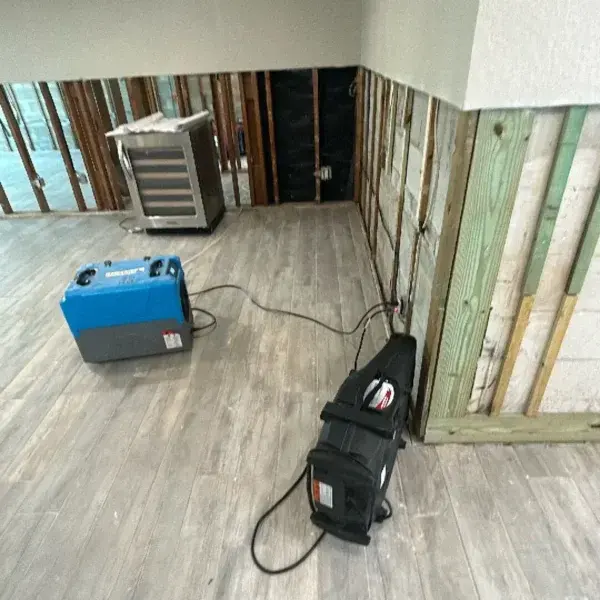
Structural Drying and Dehumidification at a glance
First steps for structural drying and dehumidification in Lakeland
- 1
Keep the house closed
Closed windows and doors let dehumidifiers work.
- 2
Leave equipment on
Do not switch the units off between visits.
- 3
Move wet items
Pull furniture off damp walls and floors.
- 4
Report changes
Tell the crew about new stains or smells.
How structural drying and dehumidification works in Lakeland
Drying is where most water damage jobs are won or lost. After Hurricane Milton, homes on Lake Bonny stayed wet for weeks, and materials that stay damp that long are harder to dry and more likely to need replacing. Standing water is only the first half of the loss.
What does structural drying and dehumidification cost in Lakeland, FL?
Structural drying in Lakeland usually costs about $1,000 to $8,000, depending on the class of the loss, the number of rooms and whether slabs or hardwood are involved. Monitoring time is part of the scope.
One or two rooms, Class 1 to 2
$1,000 to $2,500- Air movers
- LGR dehumidifier
- Daily readings
Several rooms, Class 3
$2,500 to $5,000- More equipment
- Cavity drying
- Psychrometric logs
Slab, block or hardwood, Class 4
$5,000 to $8,000- Desiccant drying
- Drying mats
- Extended monitoring
Ranges are typical, not a quote: category of water, square footage, material class and how fast drying started move the number most. Run the water damage cost calculator for a closer range.
The structural drying and dehumidification process, stop by stop
The tech who does the walkthrough maps moisture before any equipment goes down, so the drying plan matches what is actually wet. Equipment stays until the readings say dry, not until the room looks dry.
- 1
Map and measure
Meters set the baseline.
- 2
Set the equipment
Air movers and LGR units go in.
- 3
Monitor daily
Readings steer each adjustment.
- 4
Reach the goal
Equipment comes out when dry.
What the equipment does
- Air movers push dry air across wet surfaces
- LGR dehumidifiers pull water out of the air
- Desiccant units handle slabs and dense wood
- Drying mats and ports reach wall cavities
Reading the numbers
Technicians record temperature, humidity and moisture content on every visit and compare them with a dry reference from unaffected areas. Equipment is added, moved or removed based on those numbers, so the drying follows the building and not a calendar. Moisture mapping at the start shows where to point the equipment first. See water extraction for the pumping that comes before drying.
Slabs, block and hardwood
Concrete slabs, block walls and hardwood hold water longer than drywall, so they need extended monitoring and often desiccant units. Dense materials are checked until the last reading matches the dry reference.
Drying after storms and leaks
Whether the water came from a roof opening, a burst pipe or lake flooding, the drying method depends on the materials and the water category. Contaminated water is cleaned before drying equipment runs. Readings are shared with the adjuster on request.
Structural drying and dehumidification across Lakeland and nearby towns
Drying crews work across Lakeland, including ZIP 33803, 33810 and 33813, Lake Hunter, Dixieland and Lakeland Highlands, plus lakeside streets near Lake Bonny, Lake Parker and Lake Gibson.
The same service nearby: structural drying and dehumidification in Zephyrhills, Plant City, Dade City.
Related water damage services in Lakeland
Structural Drying and Dehumidification questions in Lakeland, FL
What is structural drying?
It is the controlled drying of walls, floors, ceilings and framing with air movers and dehumidifiers after water has been removed, tracked with moisture readings.
Why does the equipment run so long?
Materials release water slowly, and humid Florida air adds moisture back, so equipment stays until readings match a dry reference.
Can the equipment be turned off at night?
No. Dehumidifiers and air movers work continuously, and shutting them off lets wet materials reabsorb moisture and slows the job.
What are Class 3 and Class 4 losses?
Higher classes involve more wet surface or dense materials such as slabs and hardwood, and they need more equipment, desiccant units and longer monitoring.
Does long exposure change the drying plan?
Yes. Homes near Lake Bonny stayed wet for weeks after Milton, so wall, floor and slab drying runs longer and readings are checked for longer.
How is the finish line decided?
The crew compares readings in the wet materials with a dry reference from the same building, and equipment is removed only when they match.
Still dealing with structural drying and dehumidification?
Shut off the water at the source if it is safe, keep clear of wet outlets, then call.
Dry the structure, not just the surface
Describe what got wet, how long it has been damp and whether any slab or hardwood is involved, and the crew will set equipment, log readings and keep going until the structure is dry.
(888) 621-2041Request a drying plan- 24/7 dispatch, hurricane season and summer storms included
- Structural drying held to the IICRC S500 standard
- Daily moisture readings logged for the claim file
- Find us on Google