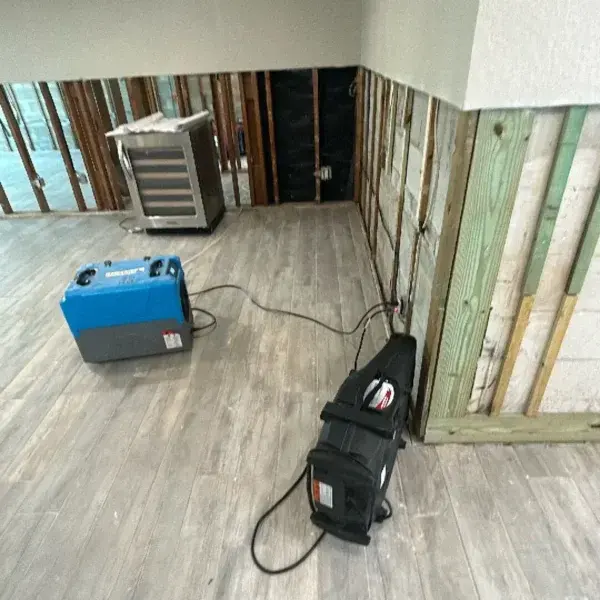
Most water losses are over in a few days. A house beside a lake that stays high can be a different story. After Hurricane Milton in October 2024, homes on Lake Bonny and Little Lake Bonny in Lakeland stayed flooded for weeks, and that long exposure changes how the drying is planned.
Key takeaways
- Milton dropped over 12 inches of rain on Lakeland in 24 hours, and all area lakes flooded, so some lakeside homes stayed wet for weeks.
- Long exposure to water means materials soak deeper, so drying is measured in readings, not in days on a calendar.
- Flood water from a lake is treated as contaminated, so porous materials come out before drying begins.
- Slabs, wall bottoms, cabinets and subfloors each dry at their own pace and are checked separately.
- Weeks of standing water can also crack a slab, so a structural check belongs in the plan.
Why a lakeside house stays wet for weeks
Lakeland is named for the many lakes near the original town site, and it has 38 named lakes. Lake Bonny and Little Lake Bonny are among those that rose quickly after Milton dropped over 12 inches of rain on the Lakeland area in 24 hours.
After the storm, all area lakes were flooded, and stormwater and natural drainage were strained. The Southwest Florida Water Management District controls how fast Lake Bonny and Lake Parker can be pumped, so lowering the lake was a slow process.
Homes on Lake Bonny and Little Lake Bonny stayed flooded for weeks.
What weeks of standing water do to a house
A few hours of water and a few weeks of water are not the same problem. The longer water sits against a structure, the farther it moves into materials and the harder it is to pull back out.
Slabs and concrete floors
A slab can absorb water from below and from the sides when the ground around it is saturated. One Little Lake Bonny neighbor was told that a cracked slab from weeks of standing water would be an expensive repair.
That is a reminder to ask for a structural check once the water recedes.
Wall bottoms and framing
Drywall wicks water upward, and framing at the bottom of a wall can stay damp long after the floor looks dry. Insulation inside the wall holds moisture and cannot be dried in place once it has soaked through.
Cabinets, trim and flooring
Cabinet bottoms, toe kicks and baseboards swell and break down. Wood and laminate floors cup or lift, and glued flooring can let go of the slab.
Flood cleanup comes before drying
Lake water is outside water. It carries soil and whatever the lake picked up from the ground around it, so it is treated as Category 3 water.
That means wet porous materials are usually removed before any drying equipment goes in.
The flood water cleanup page for Lakeland explains how extraction, removal and cleaning work together. Without that step, drying only dries contaminated material.
Waiting for the lake to drop does not mean waiting to plan. Photos, a list of damaged items and a call to an insurer can all happen while the water is still down the street, and a moisture map can be drawn up the moment the water leaves the floor.
- Standing water is extracted first.
- Carpet, pad and wet insulation are removed.
- Drywall is cut above the wet edge so what is behind it can be checked.
- Hard surfaces and framing are cleaned and treated before drying equipment is set.
How drying is planned when the house has been wet for weeks
A drying plan for a house that stayed wet for weeks starts with a moisture map. Readings are taken across the slab, the bottom of every wall, cabinets and flooring, and the equipment is set to match.
Air movers push moisture off surfaces. Low grain refrigerant dehumidifiers pull it out of the air so it does not return to the walls.
In dense material such as concrete, extra drying mats or desiccant equipment may be added. The structural drying page for Lakeland describes the equipment and the monitoring.
- A moisture map shows where equipment goes.
- Air movers and dehumidifiers run together.
- Dense material may need extra equipment or more time.
- Equipment is moved and adjusted as the readings change.

How the crew knows the house is dry
Drying ends when readings reach the dry goal, not when surfaces feel dry. Materials that were wet for weeks can feel dry on the surface while the core is still holding water.
The crew takes readings on each visit and keeps a log. That log shows when each area reached its goal and is a useful record for an insurer.
Flooring, trim and cabinets go back only after the structure reads dry.
- Readings are taken on the slab, wall bottoms, framing and cabinets.
- The same spots are checked each visit, so progress is clear.
- Equipment comes out only after the readings reach the dry goal.
- The log supports a claim and a rebuild.
Steps for a Lake Bonny area homeowner
Water that stays for weeks leaves time for planning, which is both a burden and a benefit. These steps help when it is safe to enter and the water is going down.
- Keep power off to flooded rooms until a qualified person says they are safe.
- Photograph the water level and every room before anything is moved.
- Lift wet rugs and small furniture off floors so they stop soaking up water.
- Ask for extraction and a moisture map as soon as it is safe, since every added day in contact with water makes the job larger.
- Check the insurance policy and ask about flood coverage. Some Lake Bonny residents learned they had no flood insurance after being told they were not in a flood zone.
What to expect from the stages
A long exposure job moves in stages, and each stage depends on the one before it. Skipping ahead, such as running fans before wet material is removed, wastes time and can leave hidden moisture behind.
The Lakeland service area page lists the other water losses handled in the city, and the structural drying page shows the same drying process in more detail.
- Extraction removes standing water once it is safe to enter.
- Removal takes out wet porous materials and opens walls where needed.
- Cleaning and treatment prepare the surfaces for drying.
- Drying runs with monitoring until the readings reach the dry goal.
- Rebuilding begins only after the structure reads dry and any slab concerns are checked.
Questions
Why did Lake Bonny homes stay wet for weeks?
After Milton dropped over 12 inches of rain in 24 hours, all area lakes were flooded. The water management district controls how fast Lake Bonny can be pumped, so the water went down slowly.
Can a house that sat in water for weeks be dried?
Often yes, after porous materials are removed and surfaces are cleaned. Drying then follows the readings until the slab, framing and remaining materials reach the dry goal.
Can standing water crack a slab?
It can. A Little Lake Bonny neighbor was told weeks of standing water cracked a slab. A structural check is a sensible step once the water recedes.
How is lake flood water different from a pipe leak?
Lake water is outside water and is treated as contaminated. A pipe leak puts clean water into the house, so more materials can be dried and saved.
Why is a structural check mentioned?
Weeks of saturated ground and standing water can stress a slab. Checking for cracks after the water recedes lets repairs and drying be planned together instead of one after the other.
Does homeowners insurance cover lake flooding?
It depends on the policy. Flood damage is often covered separately from other water damage, so check the wording or ask the insurer.