Mobile Home Water Damage in Lakeland, FL
Water gets into manufactured homes through floors, belly wrap and walls, so Lakeland crews extract it, check the underbelly and dry the subfloor before swollen particleboard weakens the floor.
(888) 621-2041Describe the wet floor to a crew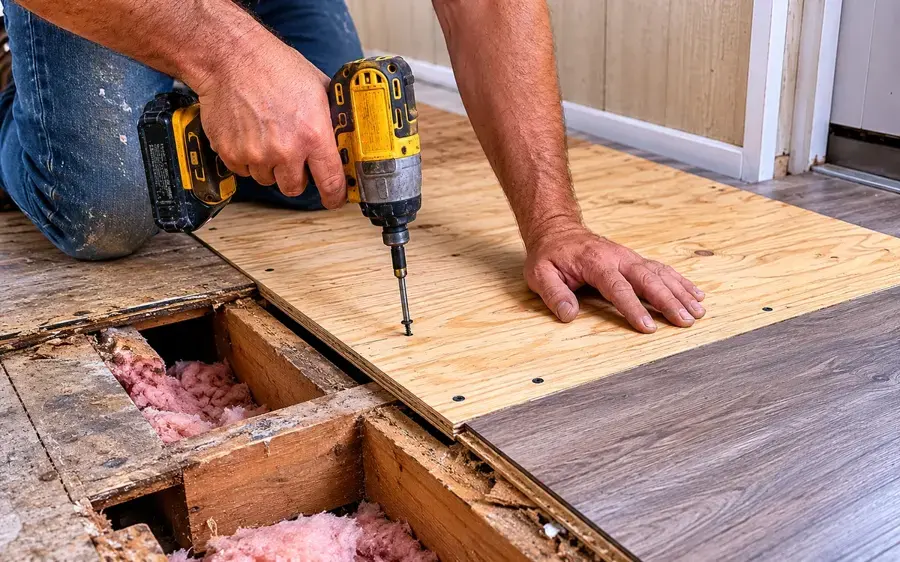
Mobile Home Water Damage at a glance
First steps for mobile home water damage in Lakeland
- 1
Stop the source
Shut off the supply to the leaking fixture or appliance.
- 2
Check the floor
Press on soft spots where the floor feels spongy and note them.
- 3
Photograph the belly
If skirting is loose, photograph any wet insulation hanging below.
- 4
Call for drying
Report the rooms affected and any soft floor areas.
How mobile home water damage works in Lakeland
Manufactured homes dry by the same principles as site-built houses, but their floors and underbellies need extra attention. Water that soaks the subfloor can hide under the belly wrap, where it keeps insulation and framing wet long after the surface dries. A technician checks both the floor above and the space below.
What does mobile home water damage cost in Lakeland, FL?
Mobile home water damage in Lakeland usually costs about $1,500 to $10,000, depending on how much subfloor is swollen and whether the belly wrap is involved. A moisture survey sets the real figure.
One room, caught early
$1,500 to $3,500- Extraction
- Underbelly check
- Floor drying
Subfloor sections replaced
$3,500 to $7,000- Swollen particleboard cut out
- Wet insulation removed
- Framing dried
Several rooms and the belly
$7,000 to $10,000- Belly wrap opened
- Large subfloor removal
- Claim documentation
Ranges are typical, not a quote: category of water, square footage, material class and how fast drying started move the number most. Run the water damage cost calculator for a closer range.
The mobile home water damage process, stop by stop
The tech who does the walkthrough maps moisture before any equipment goes down, so the drying plan matches what is actually wet. Equipment stays until the readings say dry, not until the room looks dry.
- 1
Extract the water
Surface water comes out first.
- 2
Probe the floor
Meters find soft or wet areas.
- 3
Open and dry
Wet board and insulation are removed, then dried.
- 4
Verify dryness
Readings confirm the framing.
Where the water hides
- Particleboard subfloor that swells and softens
- Insulation inside the belly wrap
- Wall bases behind paneling or drywall
- Floor seams under vinyl or carpet
How the drying is planned
Crews extract surface water, then use meters to find where it spread under the flooring. Swollen particleboard is cut out in sections, wet insulation is removed through the belly wrap, and air movers and dehumidifiers dry the framing until readings reach the dry goal. Photos go in before any section is cut.
Repairs after drying
Replacing sections of subfloor and reclosing the belly wrap are repair steps for a builder, not part of drying. Documentation from the drying visits helps that repair and the claim. For a larger leak, see water extraction.
Lakeland weather
Heavy rain and storms like Hurricane Milton can push water under skirting and through roof seams. Where the water came from lakes or streets, it is treated as contaminated under flood water cleanup rules.
Mobile home water damage across Lakeland and nearby towns
Mobile home crews work across Lakeland, including ZIP 33801, 33805 and 33811, Moorehead, Lake Hunter and the neighborhoods on the city's lakes, with checks under the floor.
The same service nearby: mobile home water damage in Zephyrhills, Plant City, Dade City.
Related water damage services in Lakeland
Mobile Home Water Damage questions in Lakeland, FL
Is mobile home water damage handled differently?
The drying principles are the same, but crews also check the subfloor material and the belly wrap, which can trap water below the floor.
Does swollen particleboard have to be replaced?
Particleboard that swells usually will not return to shape, so affected sections are cut out, the framing is dried and a builder replaces the floor.
Can water sit in the belly after a leak?
Yes. Insulation inside the belly wrap holds water and keeps framing damp so it is checked and removed where wet.
Does insurance cover manufactured home water damage?
Many policies cover sudden leaks, but terms vary by policy and cause. Check your own insurer and keep photos and moisture logs for the file.
How long does floor drying take?
Most jobs need several days, longer where subfloor sections or insulation were soaked. Daily readings decide when equipment leaves.
What if the water came from a lake or street?
It is treated as contaminated, so porous materials are removed and surfaces are cleaned before drying starts.
Still dealing with mobile home water damage?
Shut off the water at the source if it is safe, keep clear of wet outlets, then call.
Dry the floor and the belly
Explain where the floor feels soft, what leaked and how long it has been wet, and the crew will plan extraction, subfloor drying and a check under the home.
(888) 621-2041Ask about floor drying- 24/7 dispatch, hurricane season and summer storms included
- Structural drying held to the IICRC S500 standard
- Daily moisture readings logged for the claim file
- Find us on Google